The Role of Profiling in the Recruitment Process
Author: Applied Strengths Limited
Introduction: Rethinking How We Hire
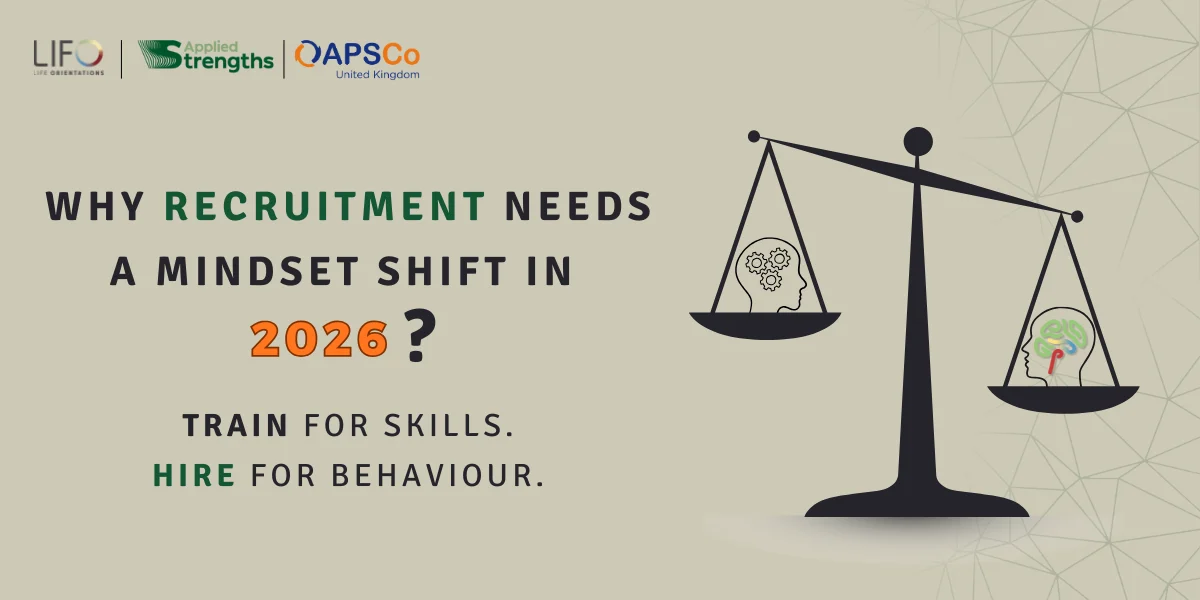
Research continues to show that personality and behavioural tendencies can be as meaningful as cognitive ability. How you perform can be as useful an indicator of your effectiveness as what you know. It is arguably easier to upskill, through education, training and experience than it is to develop the appropriate behaviours for a given team position or function. Hence the increasingly popular mantra ‘train for skills, but hire for behaviour’.
Historical Background: The Evolution of Hiring
Over the last 20 years, recruitment has shifted from a credential-led, reactive process to a data-enabled, candidate-centred, behaviour- and potential- focused system. The changes are not just technological; they reflect deeper assumptions about what predicts performance and how people actually succeed at work.
To understand the changes we can compare the situation in the early 2000s with today:
1. From CV-Based Hiring to Behavioural Evidence
.png)
The underlying shift is the recognition that knowledge is transferable and trainable, but behavioural patterns are more stable and predictive ‘(Train for skills, hire for behaviour’)
2. From Fit to Role to Fit to Context
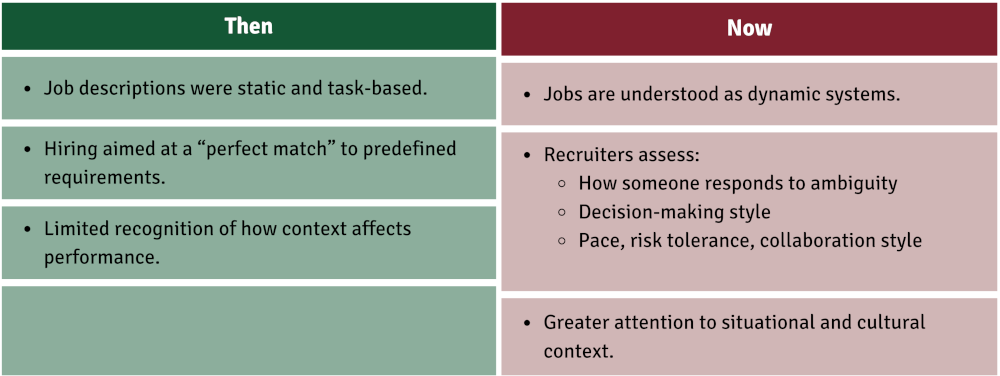
This aligns with ideas like Trait Activation Theory: behaviour matters insofar as it is activated by the work environment. In LIFO® terms we describe this as behaviour being situationally based and our behaviour (or operating style) preference can, and often does, vary according to the conditions.
.png)
3. From Intuition-Led Hiring to Evidence-Based Selection
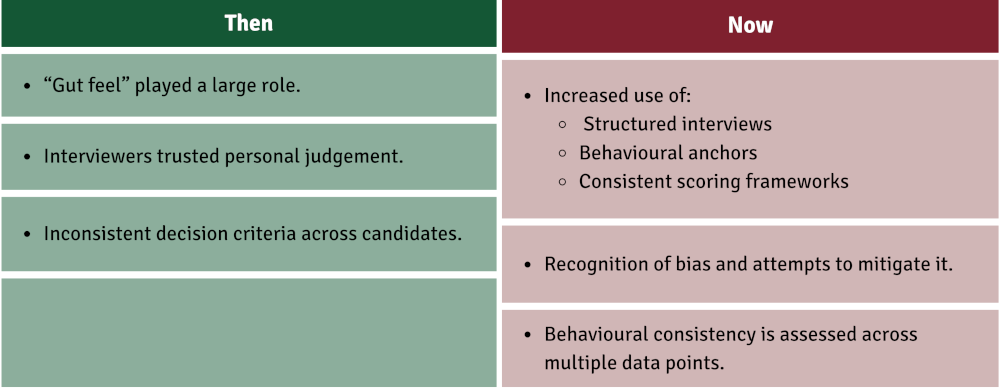
Importantly, this is not a move toward more psychometrics per se, but toward observable behaviour and repeatable performance indicators. Psychometrics are a useful insight into personality which is typically ‘fixed’ to a large extent. Behaviour is fluid, flexible and manageable and responds positively to coaching. Evidence based selection also helps to avoid the danger of ‘affinity bias’ in candidate treatment and selection.
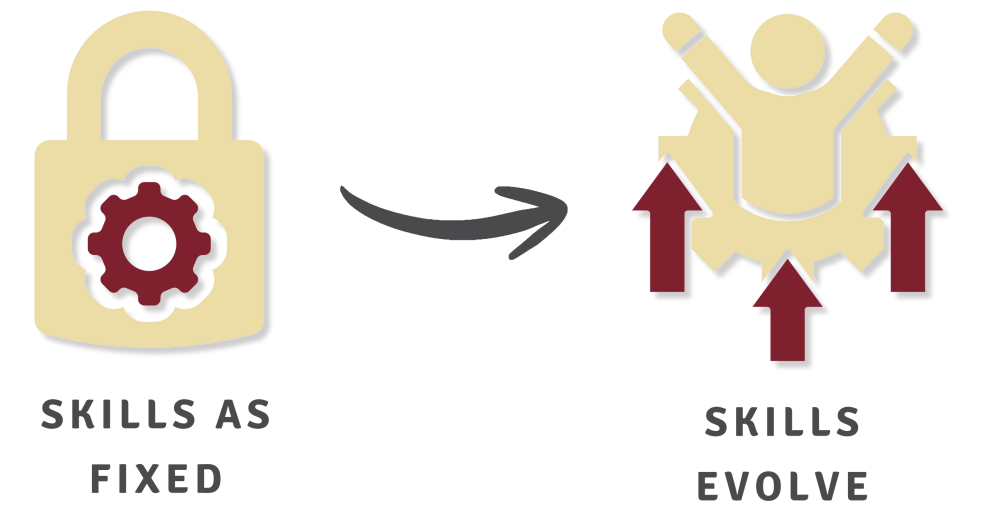
4. From Fixed Skills to Learning Agility and Adaptability
.png)
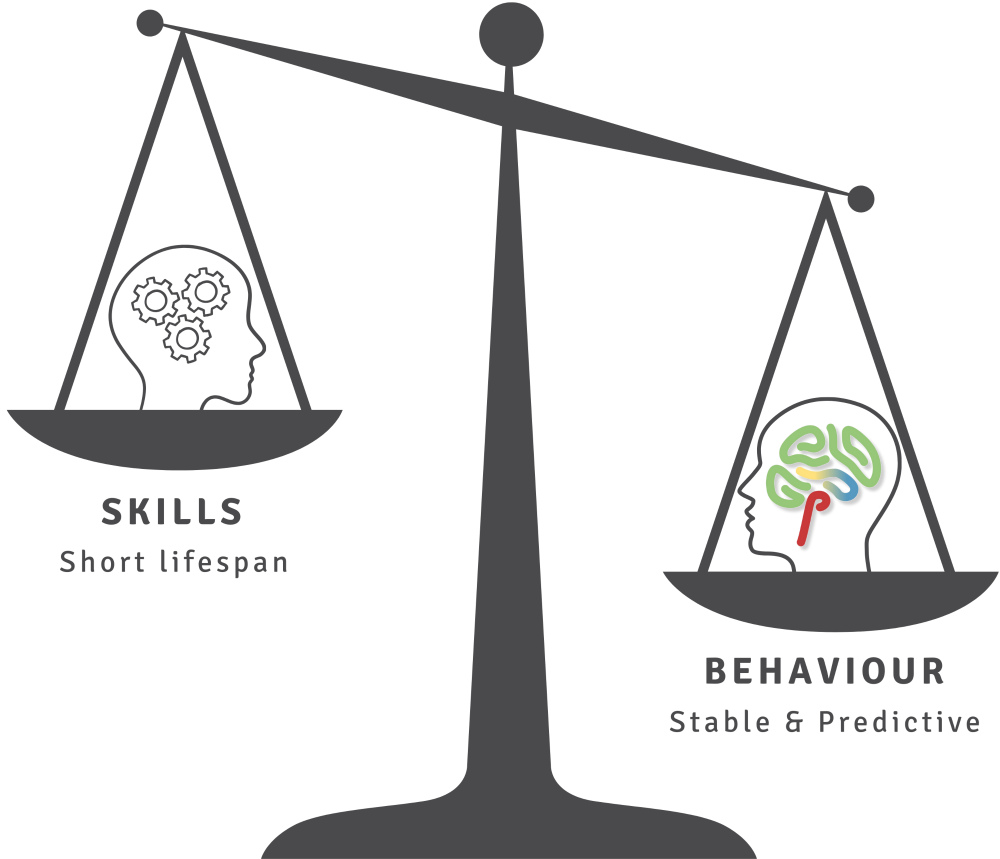
Recruitment increasingly tries to identify how someone learns and performs, not just what they already know.
5. From recruitment as gatekeeping to recruitment as prediction
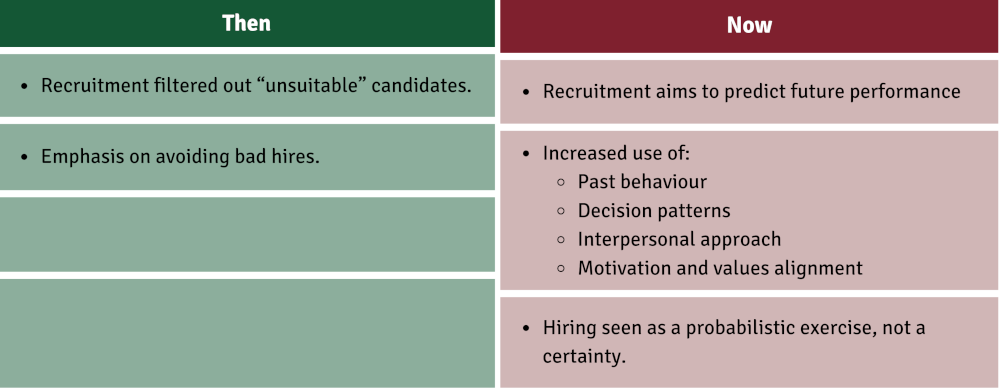
In this area behaviour profiling has a crucial role: it is about forecasting likely behaviour under pressure, change, and complexity.
6. From Employer-Centred to Candidate-Centred Hiring
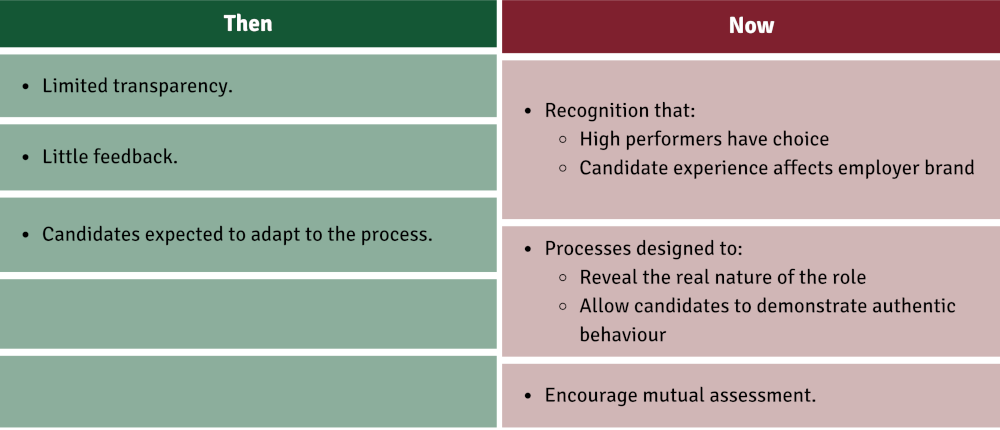
This has reinforced the need for realistic behavioural assessment, using proven tools like LIFO® not artificial testing environments.
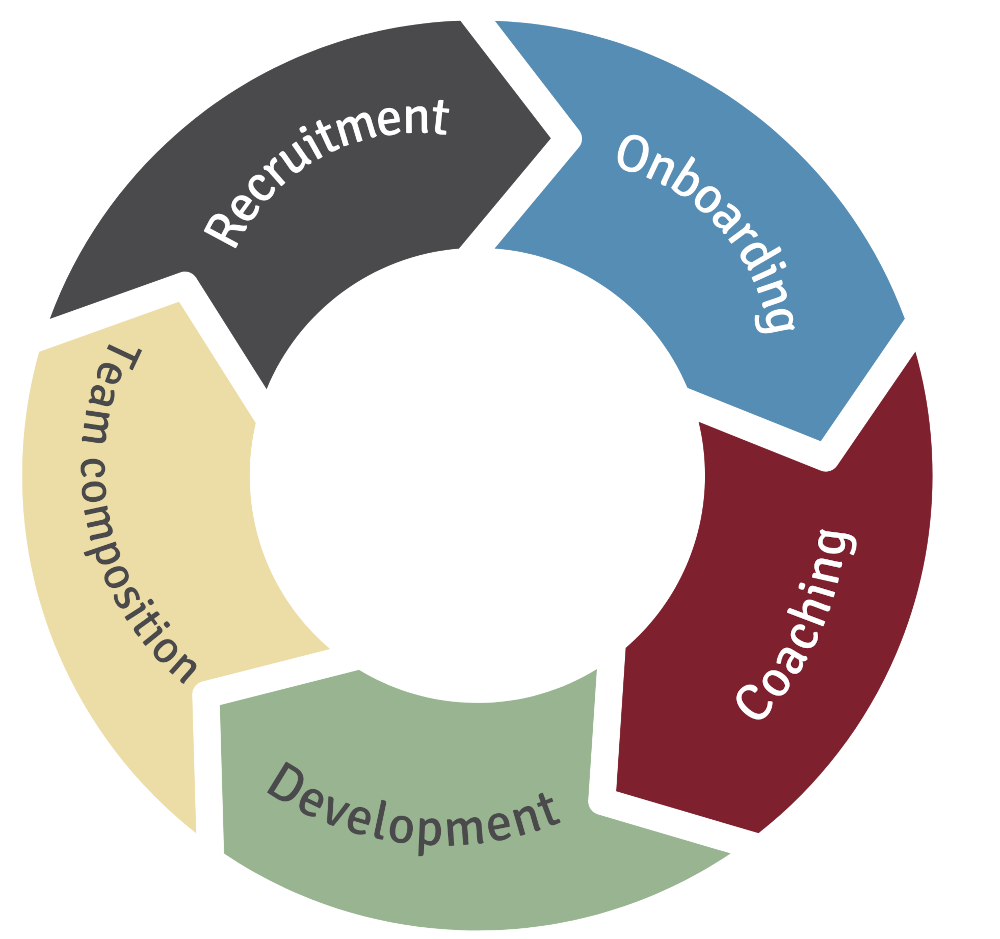
7. From One-Time Selection to Ongoing Talent Decisions
(Then: Hiring as an Endpoint, Now: Integrated Talent Lifecycle)
.png)
This makes behaviour profiling more valuable than static knowledge or skills assessment, because it remains relevant after appointment.
Conclusion: Why Behaviour Matters More Than Ever
Over the past twenty years, recruitment has evolved from a qualification-based screening exercise into a forward-looking prediction of behaviour and performance, reflecting the growing recognition that while skills can be taught, behavioural patterns and operating styles are far more indicative of effectiveness at work.
What’s Next: Improve Your Hiring Decisions with LIFO®
If you want to move beyond CV-based hiring and start making more accurate, behaviour-based talent decisions, LIFO® offers practical tools to support your organization.
👉 Contact us to explore how LIFO® supports better hiring and leadership development